
What if your accounting software was no longer just a digital ledger, but a proactive compliance engine capable of shielding your business from a 10,000 AED penalty? With the UAE’s mandatory e-invoicing pilot program starting on July 1, 2026, the margin for error in financial reporting has effectively vanished. For many business owners, the prospect of accounting software implementation dubai feels like a daunting hurdle, often shadowed by the fear of data loss or the complexity of reconciling accounts for FTA audits. It’s a valid concern; transitioning your entire financial history while maintaining full compliance requires more than just a new login.
You likely recognize that manual spreadsheets or legacy systems can’t keep pace with the 9% corporate tax rate or the new 15% Domestic Minimum Top-up Tax requirements. This guide provides a strategic roadmap to help you select and deploy a system that ensures seamless data migration and automated tax reporting. We will explore how to align your digital infrastructure with goAML and FTA requirements to gain real-time financial visibility before the 2027 mandatory deadlines arrive.
Key Takeaways
- Understand why aligning your digital tools with the 2026 e-invoicing mandate is essential for maintaining operational continuity and regulatory standing.
- Learn the specific criteria for selecting FTA-accredited systems to ensure your accounting software implementation dubai results in a truly “UAE-ready” solution.
- Explore the distinct advantages of leading platforms like QuickBooks and Xero to determine which best supports your specific business scale and reporting needs.
- Discover a structured, phase-based roadmap for data migration that prevents common errors and ensures a clean transition of your financial records.
- Identify how professional guidance bridges the gap between basic IT setup and complex tax compliance to maximize your long-term return on investment.
Table of Contents
- Why is Accounting Software Implementation Critical for UAE Businesses in 2026?
- Criteria for Selecting the Right Accounting System in the UAE
- Comparing Top Accounting Software Solutions for the UAE Market
- The Step-by-Step Accounting Software Implementation Roadmap
- Maximizing ROI: Why Partner with IBR Group for Implementation?
Why is Accounting Software Implementation Critical for UAE Businesses in 2026?
The process of accounting software implementation dubai is no longer a choice for the modern enterprise; it’s a strategic alignment of your digital tools with the UAE’s rapidly maturing fiscal regulations. In 2026, this implementation represents the bridge between basic bookkeeping and a robust compliance engine. As the Federal Tax Authority (FTA) tightens its grip on digital transparency, having a system that mirrors the core functions of accounting software is vital for survival. It’s about moving away from reactive data entry toward a proactive stance that protects your license and reputation.
The most significant driver for this shift is the 2026 e-invoicing mandate. With a voluntary pilot program beginning on July 1, 2026, every transaction will soon require real-time validation. Businesses that fail to digitize their workflows risk more than just administrative friction; they face substantial fines and operational delays. By integrating these requirements early, you reduce the risk of costly penalties during your corporate tax registration and subsequent filing periods.
The 2026 Regulatory Landscape: VAT, Corporate Tax, and Beyond
Modern systems must now navigate the complexities of a 9% corporate tax rate on income exceeding AED 375,000. For businesses operating in freezones, the software must distinguish between qualifying and non-qualifying income to maintain a 0% rate where applicable. Beyond tax, the role of digital records is central to maintaining anti-money laundering reporting uae standards. Manual records are quickly becoming a liability during FTA audits. They lack the audit trails and time stamps required to prove the validity of transactions in a high-scrutiny environment.
Mitigating Risk Through Professional Digital Transformation
One of the most common concerns for business owners is the initial cost of transition. However, when you weigh the investment against the 10,000 AED penalty for late VAT registration or the steep costs of tax errors, the value of professional accounting software implementation dubai becomes clear. High-quality implementation ensures data integrity that stands up to external audits and bank queries. It provides the peace of mind that your financial history is secure and retrievable. Ultimately, a properly configured accounting system serves as a sophisticated compliance shield that empowers UAE directors to lead with confidence rather than fear.
Criteria for Selecting the Right Accounting System in the UAE
How do you determine if a software is truly “UAE-ready”? In a market as dynamic as Dubai, the answer lies in a platform’s ability to evolve alongside local regulations. Choosing the right system is a foundational step in your accounting software implementation dubai. It requires looking beyond basic ledger functions to ensure the tool can handle the technicalities of the 2026 e-invoicing mandate. Systems should align with KPMG’s technical guidance on e-invoicing, which details the specific data fields required for mandatory reporting. Selecting an FTA-accredited solution ensures that your VAT return filing remains accurate and compliant, protecting you from the administrative friction of manual corrections.
Businesses must also weigh cloud-based vs. on-premise solutions. While on-premise options offer perceived control, cloud solutions provide the agility needed to push regulatory updates instantly. This accessibility is crucial for data security and for scaling operations across different freezones or international markets. A cloud-first approach allows your financial data to be accessible yet protected, ensuring that your team can collaborate securely from any location.
Essential Features for Local Compliance
A robust system must offer multi-currency support, especially for firms managing international trade or BVI entities. It should automate VAT calculations and return generation in strict accordance with UAE laws. It’s also vital that the platform facilitates integration with the goaml registration uae portal for reporting entities. This integration is not just about filing; it’s a critical tool for fraud analysis. When local banks raise queries regarding transaction transparency, having a system that provides clear, exportable audit trails can resolve these issues in days rather than months. If you’re unsure which platform fits your specific license type, seeking a professional compliance assessment can provide the clarity you need.
User Experience and Support Ecosystem
Success depends on how your team interacts with the software daily. A user-friendly interface reduces the learning curve for in-house accounting teams and minimizes manual entry errors. However, even the best software requires a local support ecosystem. Professional implementation consultants ensure the system integrates with your existing CRM or inventory management tools. This creates a unified data environment. For businesses looking to optimize this ecosystem further, Shark Matrix Technologies LLC provides custom software engineering and digital solutions that enhance how financial data flows across your entire operation. It ensures that when you undergo an external audit, every figure in your ledger is backed by a digital paper trail. Strategic accounting software implementation dubai ensures that your technology acts as a partner in growth, not a bottleneck to compliance.
Comparing Top Accounting Software Solutions for the UAE Market
Which platform aligns most closely with your 2026 growth strategy? Selecting the right tool is the cornerstone of a successful accounting software implementation dubai. It’s not just about recording numbers; it’s about building a data architecture that supports your long-term goals. Each solution in the market has been engineered with specific business archetypes in mind, from the lean startup to the established trading house.
QuickBooks Online stands out as a premier choice for SMEs due to its intuitive interface and simplified navigation. It’s particularly effective for business owners who manage their own books, offering a gentle learning curve without sacrificing essential VAT reporting capabilities. Xero provides a more robust ecosystem for those who value integration. It connects seamlessly with hundreds of third-party applications, making it a favorite for tech-forward companies that require beautiful, customizable reporting and multi-user collaboration.
Zoho Books has become the preferred choice for businesses already invested in the Zoho suite, such as their CRM or inventory modules. This native synchronization eliminates data silos and ensures that every sales transaction flows directly into your ledger. TallyPrime remains the traditional powerhouse for the UAE’s trading and inventory-heavy sectors. Its latest version, 5.1, is specifically designed to handle the high volume of transactions typical in manufacturing and wholesale while maintaining strict compliance with local tax requirements.
For businesses in the media and broadcasting sector, where managing a vast inventory of high-end technology is a daily requirement, organizations like United Broadcast & Media Solutions (UBMS) set the standard for technical excellence, reinforcing the need for accounting systems that can precisely track specialized assets and equipment lifecycles.
| Feature | QuickBooks Online | Xero | Zoho Books | TallyPrime |
|---|---|---|---|---|
| VAT Compliance | FTA Accredited | FTA Accredited | FTA Accredited | Full Support |
| E-invoicing Readiness | High | High | High | High (v5.1+) |
| Primary Pricing Model | Monthly Subscription | Monthly Subscription | Tiered Subscription | Perpetual or Rental |
| Ease of Implementation | High | Moderate | High | Moderate |
Cloud vs. Desktop: Making the Strategic Choice
The shift toward cloud-based systems is no longer a trend; it’s a necessity for real-time external audit firms in dubai collaboration. Cloud environments in the UAE now utilize sophisticated encryption protocols that often exceed the security of local, on-premise servers. While subscription models require ongoing payments, they offer the advantage of automatic regulatory updates, ensuring you’re never caught using outdated tax logic. This proactive approach to data accessibility streamlines the audit process and provides your advisors with immediate access to critical financial snapshots.
Industry-Specific Recommendations
Your choice should reflect your license type and operational complexity. For freezone company setup uae entities focused on professional services, Xero or QuickBooks often provide the best balance of simplicity and professional output. Conversely, manufacturing and logistics firms with complex ERP needs may require the deep inventory layers found in TallyPrime or Zoho’s advanced modules. For high-volume retail businesses, we recommend Odoo or Zoho Books due to their robust point-of-sale integrations and real-time inventory tracking. A tailored accounting software implementation dubai ensures that your chosen platform doesn’t just record history, but actively facilitates your future growth.
The Step-by-Step Accounting Software Implementation Roadmap
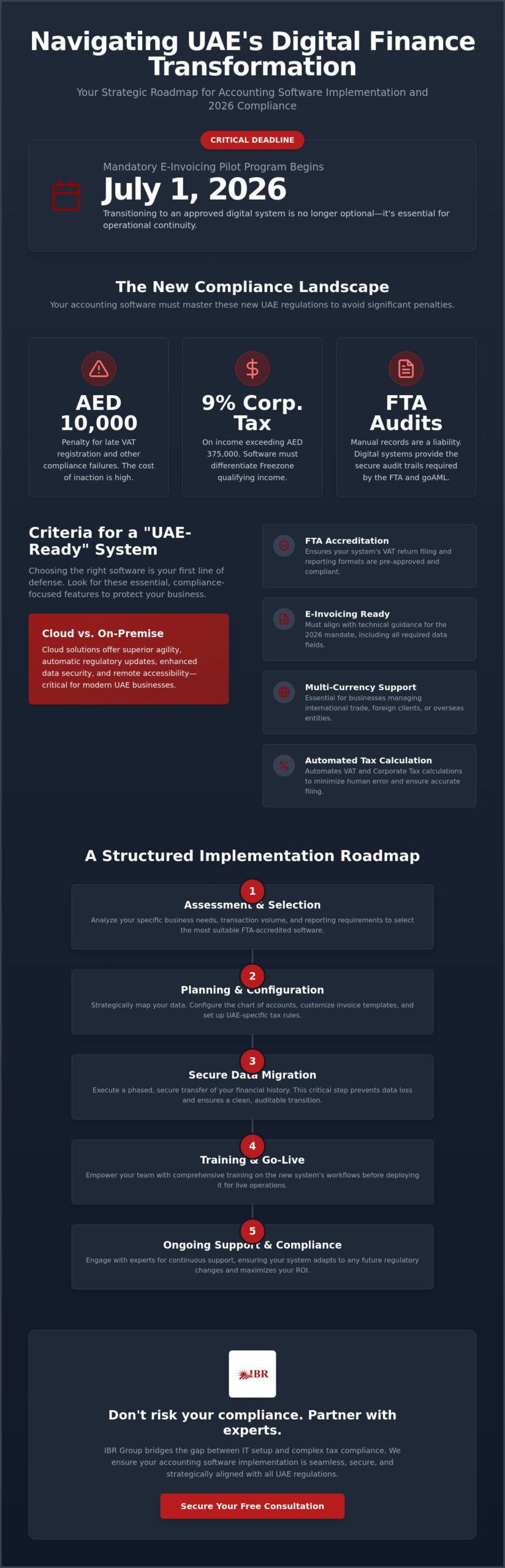
A successful accounting software implementation dubai follows a rigorous, five-phase methodology designed to eliminate operational blind spots. It’s not a simple software installation; it’s a structural transformation of your financial reporting. In the same way that rocatech.ae helps businesses secure their premises and eliminate physical blind spots through automation, following a methodical path ensures that your digital tools are perfectly calibrated to the UAE’s specific tax and audit requirements. This journey begins long before the first data entry occurs.
- Phase 1: Discovery and Requirement Mapping. We begin by aligning the software’s capabilities with your specific business goals, ensuring every license requirement and reporting need is accounted for.
- Phase 2: Data Cleaning and Migration. This is the most critical safeguard against the “garbage-in, garbage-out” phenomenon. We meticulously scrub your existing records to ensure only accurate, compliant data enters the new system.
- Phase 3: Configuration and Customization. Here, the Chart of Accounts is tailored to reflect UAE tax categories, including specific divisions for taxable and exempt supplies. To see how professional firms approach this critical structure, check out Samios Partners.
- Phase 4: User Training and UAT. Empowering your team through User Acceptance Testing (UAT) ensures they can navigate the new system with confidence and precision.
- Phase 5: Go-Live and Parallel Running. Unlike many providers who advocate for a “big bang” switch, we recommend a parallel run. Operating your old and new systems simultaneously for a set period provides a vital safety net to verify balance accuracy before the final transition.
Ensuring a Flawless Data Migration
How do you transition years of historical data without losing integrity? The process involves mapping opening balances and legacy ledgers to new UAE Corporate Tax categories. This transition should be viewed through a business feasibility study dubai lens, ensuring the migration supports your long-term fiscal health. Verifying data accuracy at this stage prevents future disputes during FTA audits or bank reconciliations. It’s about building a clean foundation that makes future reporting effortless.
Post-Implementation: Support and Optimization
The work doesn’t end once the system is live. Establishing automated backup schedules and regular security audits is essential for protecting sensitive financial data in the UAE’s digital environment. We recommend quarterly reviews to ensure your software settings evolve alongside new FTA regulations or e-invoicing updates. This ongoing optimization allows you to leverage your software for advanced fraud analysis and precise stock valuation, turning a compliance requirement into a competitive advantage. If you’re ready to secure your financial future, our experts can guide your accounting software implementation dubai with the precision your business deserves.
Maximizing ROI: Why Partner with IBR Group for Implementation?
Why settle for a basic IT setup when your financial future depends on regulatory precision? The true value of accounting software implementation dubai lies in the expertise of the hands that configure it. At IBR Group, we approach software deployment not as a technical task, but as a strategic compliance initiative led by seasoned auditors and tax experts. This distinction is vital. While a standard IT provider might ensure the software runs, our team ensures that every automated entry aligns with the latest FTA mandates and UAE Corporate Tax laws.
We bridge the critical gap between digital infrastructure and fiscal responsibility. By customizing your Chart of Accounts from the ground up, we simplify your future VAT and Corporate Tax filings. This proactive structuring means your internal teams spend less time correcting manual errors and more time focusing on core business growth. Our professional project management reduces the administrative burden on your staff, providing a seamless transition that respects your operational continuity.
Beyond the Software: A Holistic Financial Partnership
A properly implemented system does more than just record transactions; it serves as a foundation for your external audit readiness. When your software is configured by those who understand the nuances of UAE law, generating professional reports to resolve bank or legal queries becomes effortless. You gain the ability to perform strategic tax planning based on real-time, accurate financial data rather than historical guesswork. This level of visibility is what transforms a compliance requirement into a powerful tool for informed decision-making and long-term stability.
Get Started with IBR Group Today
The road to digital compliance in 2026 doesn’t have to be navigated alone. We invite you to schedule a comprehensive software needs assessment where our experts will evaluate your current workflows and growth objectives. Our goal is to provide the peace of mind that comes with knowing your financial systems are robust, secure, and fully compliant with the evolving regional landscape. Don’t leave your regulatory standing to chance. Contact IBR Group for expert accounting software implementation and secure a partner dedicated to your professional excellence.
Securing Your Financial Future in the 2026 Digital Landscape
How will your business adapt as the UAE transitions to a fully digitized tax environment? The shift toward mandatory e-invoicing and corporate tax transparency requires more than just new software; it demands a strategic overhaul of your financial workflows. By selecting an FTA-accredited platform and following a rigorous, phased roadmap, you transform a regulatory obligation into a source of real-time financial visibility. This journey isn’t just about avoiding penalties; it’s about building a foundation for sustainable growth.
A successful accounting software implementation dubai requires a partner who understands the intricate intersection of technology and local law. With over 15 years of UAE financial expertise, IBR Group provides FTA-aligned implementation strategies that safeguard your data and simplify future audits. Our team possesses deep experience in resolving complex bank and tax queries, ensuring your financial reports stand up to the highest levels of scrutiny. Secure your 2026 compliance with professional accounting software implementation from IBR Group and lead your enterprise with the confidence that comes from expert oversight. We look forward to helping you achieve professional excellence in this evolving landscape.
Frequently Asked Questions
Is accounting software mandatory for all UAE businesses in 2026?
Accounting software is practically essential for businesses to comply with the Federal Tax Authority’s (FTA) digital reporting requirements. While the law mandates “proper records,” the 2026 e-invoicing mandate and Corporate Tax filing deadlines make manual record-keeping untenable. Maintaining digital ledgers ensures you can produce the FTA Audit File (FAF) upon request. This digital transition shields your business from non-compliance penalties and ensures operational transparency.
How long does a typical accounting software implementation take?
A typical accounting software implementation dubai project usually spans four to eight weeks. This timeline depends on the complexity of your Chart of Accounts and the volume of historical data requiring migration. We prioritize a methodical approach that includes discovery, data cleaning, and staff training. This structured pace ensures your system is fully optimized before you go live, preventing technical disruptions during critical filing periods.
Can I migrate my data from Excel to QuickBooks or Xero easily?
You can migrate data from Excel to modern platforms like QuickBooks or Xero, but the process requires careful mapping. Historical data must be cleaned and categorized to align with UAE tax requirements before the import begins. Professional migration prevents the “garbage-in, garbage-out” scenario. It ensures your opening balances are accurate and your historical transactions are searchable for future internal or external audits.
Which software is best for FTA VAT return filing compliance?
Several platforms are highly effective for FTA VAT compliance, including Zoho Books, QuickBooks Online, and Xero. These systems are designed to automate VAT calculations and generate the necessary return files directly. The ideal choice depends on your specific industry needs. For instance, inventory-heavy businesses often prefer TallyPrime, while service-based firms in freezones frequently opt for the integration capabilities of Xero.
Do I need a local consultant for accounting software implementation?
Engaging a local consultant is highly recommended to ensure your system is calibrated to UAE-specific fiscal regulations. While software is often global, the tax logic for UAE Corporate Tax and VAT is highly localized. A consultant with regional expertise bridges the gap between basic IT setup and regulatory compliance. This professional oversight provides the peace of mind that your reporting will withstand FTA scrutiny and bank queries.
How does the software handle UAE Corporate Tax calculations?
Modern accounting systems handle UAE Corporate Tax by applying the 9% rate to taxable income exceeding the AED 375,000 threshold. The software categorizes expenses and income to distinguish between qualifying and non-qualifying activities, which is vital for freezone entities. Automated tax engines reduce the risk of human error during the calculation process. This ensures your filings are precise and submitted well before the mandatory nine-month deadline.
What is the cost of implementing a professional accounting system?
The cost of accounting software implementation dubai varies based on the scope of data migration and the complexity of your business structure. While there is an initial investment, it’s significantly lower than the cost of non-compliance penalties or the administrative burden of manual bookkeeping. Investing in professional setup ensures your digital infrastructure is an asset for growth rather than a recurring technical liability or a source of audit risk.
Even outside the UAE, finding the right partner is crucial for financial success; for example, you can discover Cairns Quality Accounting to see how boutique firms support small businesses with expert taxation services.
Will my accounting software be ready for the 2026 e-invoicing mandate?
Your software will be ready for the 2026 e-invoicing mandate if it supports integration with an Accredited Service Provider (ASP). Leading platforms are already updating their systems to meet the July 1, 2026, voluntary pilot requirements. We ensure that during implementation, your system is configured to handle mandatory data fields. This proactive preparation allows your business to transition seamlessly when mandatory deadlines arrive for your specific revenue bracket.